Deadly Silence: Kala-Azar Ravages Kenya’s North as State and Donors Retreat
Over 3,000 infected, over 80 dead across multiple counties and mostly children. A deadly parasitic disease, kala-azar, is sweeping across Kenya’s arid counties — with over 3,000 cases recorded between January and June 2025 alone. In Turkana County, 36 patients — mostly children — are crowded into one hospital, the highest number in its history. Some have travelled over 100 kilometres to seek treatment. As treatment centres overflow, diagnosis remains slow, treatment costly, and support from donors uncertain. With 11 counties affected and cases spilling in from Uganda, Ethiopia, and South Sudan, the outbreak is stretching Kenya’s health system to its limits.


It was the blood-curdling wailing of a woman grieving the death of her son that finally put fear into Lucy Nauru’s heart. For more than a week, 24-year-old Lucy and her son slept next to the now-grieving mother at Lodwar County Referral Hospital in Turkana County, Kenya.
“The mother’s pain, as I saw it, changed me,” Lucy told Defrontera.
The two mothers are among many in this ward who have travelled over 100 kilometres to seek care for their children suffering from visceral leishmaniasis, a deadly parasitic disease that has killed more than 40 people in Turkana County in the past six months. Lucy brought her 12-year-old son, James, from Kerio in Turkana Central, more than 80 kilometres away. Kennedy Wasilwa, a clinician at the facility, told Defrontera that the hospital is treating 36 patients — the highest number in the facility’s history — and most of them are children.
“Between July 2024 and June 2025, we have treated about 291 confirmed cases, with peaks between November last year and January this year, each month registering at least 50 cases,” clinician Wasilwa said.
Leishmaniasis is a parasitic disease transmitted to humans through the bite of a sandfly, according to the World Health Organization (WHO). There are three types of the disease. The most common — cutaneous leishmaniasis — causes skin sores, while another form causes ulcers that can erode the nose and lips. Visceral leishmaniasis — also known as black fever or kala-azar — is the deadliest form. It attacks the spleen, liver, and lymph nodes, destroying the immune system. Without treatment, the patient typically dies within one to two years.
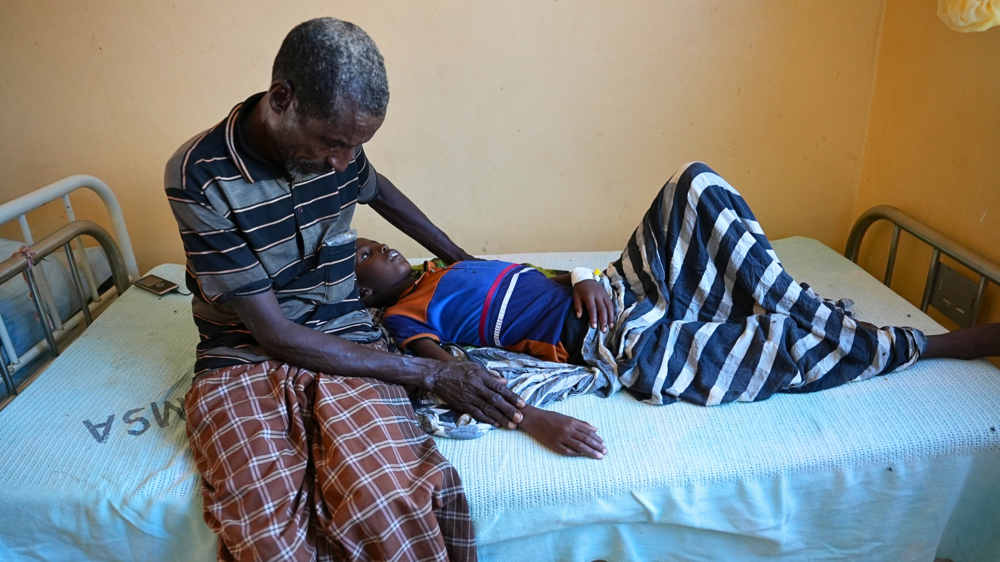
In the ward in Turkana, 22 children — some only months old — lie in hospital beds, their arms and legs thin, tummies distended and faces silent. Some are sweating, others too weak to speak or move — thin plastic tubes run from their hands, feeding medicine into their frail bodies. Most patients are young boys — herders who roam the arid land tending to goats, camels, sheep, and cattle — prime targets for sandflies.
Doctors Without Borders — known by its French name Médecins Sans Frontières (MSF) — told Defrontera that the same disease has killed over 40 people in two other arid counties: Wajir and Mandera. Dr Grace Vugutza, the MSF medical coordinator who oversees the response, said that health facilities in Wajir County are overwhelmed, as patients from surrounding regions flood into the referral hospital where MSF has supplied medication and trained healthcare workers.
Data obtained by Defrontera from the Kenya Health Information System (KHIS) shows that between January and June alone, Kenya recorded over 3,000 cases of visceral leishmaniasis, also known as kala-azar. Kenya is one of the ten countries that account for more than 90% of new global cases each year. Public health specialists fear that the true death toll — including those who never reached hospitals — could number in the hundreds.

Even when mothers like Lucy do the right thing — watching over their children’s health and bringing them to hospital at the first sign of illness — they remain trapped in the deadly scope of kala-azar. That’s because everything in their environment makes it easy for the disease to thrive and for people to suffer. Kala-azar is one of 21 diseases that the WHO classifies as neglected tropical diseases — so named because they disproportionately affect the world’s poorest people. When patients cannot afford treatment, there is little incentive for pharmaceutical companies to develop better diagnostics or medicines.
Dr Cherinet Adera, Senior Market Access Manager at the Drugs for Neglected Diseases initiative (DNDi), a global non-profit developing new treatments for neglected diseases, said the diseases are neglected in terms of funding, resources, and research.
“If something happens to people who have money, it is easier to rally because those people can pay for it,” Dr Adera said.
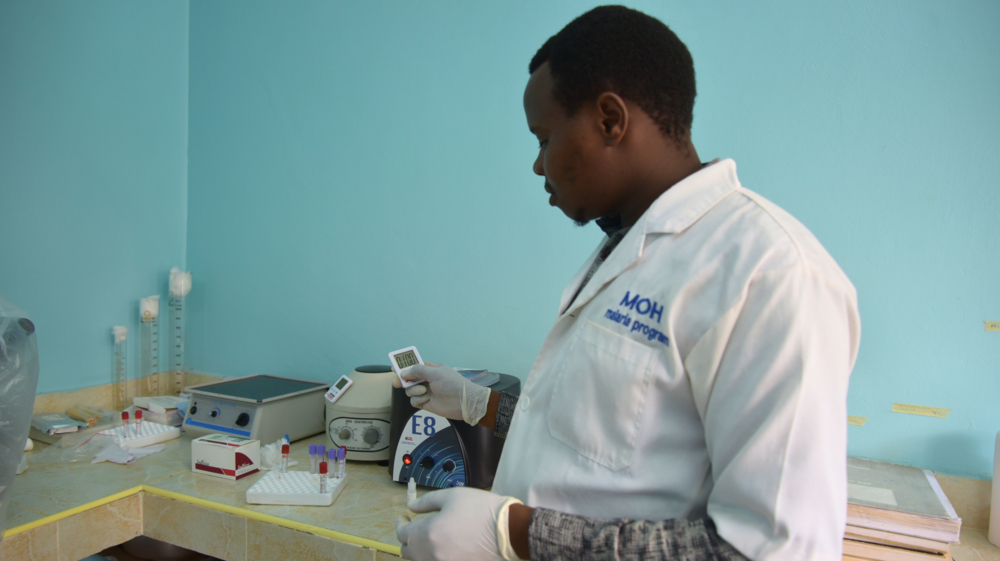
According to Dr Vugutza, even healthcare workers often miss the diagnosis because kala-azar’s symptoms mimic more common diseases. Rapid diagnostic tests (RDTs), designed to identify infectious diseases quickly, are unreliable in detecting kala-azar. The most reliable one — the IT-Leish, used by MSF during the Wajir outbreak — has been discontinued, Dr Vugutza said.
“Kala-azar is not specific; it can be confused with malaria and other diseases,” Dr Vugutza said.
In some cases, diagnosis involves patients undergoing a spleen or bone marrow aspiration — a sensitive procedure where clinicians extract fluid using a large syringe. If the needle misses and punctures the spleen, the patient can die.
The most reliable test now is the Direct Agglutination Test (DAT), which detects whether the anaemia the patient has is due to parasite-induced red blood cell destruction. Though accurate, DAT is expensive and requires laboratories, refrigeration, and skilled technicians. At Wajir County Referral Hospital, clinicians must sometimes wait a full day — or two — to gather enough patient samples before they can justify using the costly reagent.
After the challenges and costs of diagnosis come the costs of treatment. Since the first documented kala-azar case in 1824 in Mahomedpore, India, little has been invested in developing better diagnostics or medicines. Most treatments remain painful, toxic, or costly and require lengthy hospital stays. Dr Cherinet Adera said the first-line treatment is a combination of Sodium Stibogluconate and Paromomycin (SSG-PM). This 17-day injectable regimen is also used in Ethiopia, Sudan, and Uganda.
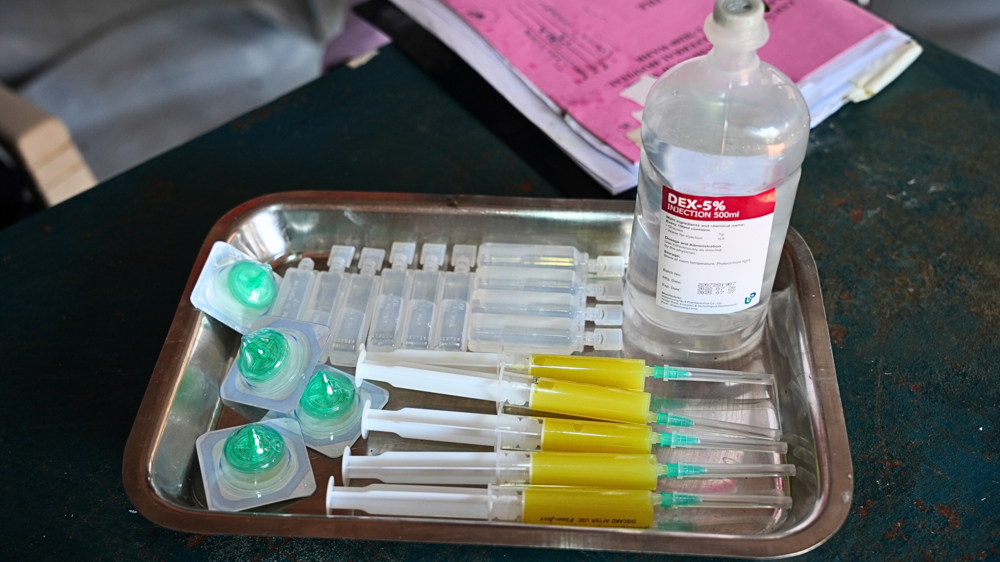
Thirteen years ago, patients — including in Kenya — had to endure a gruelling 30-day course of the toxic SSG drug alone. John Okuom told Defrontera how he had been in Lodwar County Referral Hospital for a long time with his three-year-old son, Decimal Ora.
“We have been in the facility for 22 days. I have not gone home in all that time,” John told Defrontera.
It is costly, both for the hospital and the patients. Kenya has not publicly quantified treatment costs, but in Ethiopia — which uses the same protocol — one round of SSG-PM treatment costs about KES 13,500 (USD 105). At the health facility, officials noted that mothers sometimes come with as many as four children. Having medicine is one challenge; administering it is another.
“Before starting treatment, we conduct full blood counts and liver function tests, as the drugs can be toxic,” said Wasilwa.
For older patients or those co-infected with HIV, clinicians use a much more expensive medicine: AmBisome, which costs at least KES 43,000 (USD 331) — and as much as USD 5,000, depending on complications.
Some of the 11 Kenyan counties where kala-azar is endemic — Baringo, Garissa, Isiolo, Kajiado, Kitui, Marsabit, Mandera, Tharaka-Nithi, Turkana, Wajir, and West Pokot — border countries from which patients cross into Kenya in critical condition. Kacheliba Hospital in West Pokot treats patients from Uganda. Nancy Kinyonge, CEO of Lodwar County and Referral Hospital, said the hospital receives patients from Uganda, Ethiopia, and South Sudan, straining already limited resources. Many patients arrive severely anaemic, often after delays caused by seeking treatment from traditional healers.
“Blood transfusions remain a significant challenge, as the hospital requires between 20 and 25 units of blood daily — around 390 units per month,” said Ms Kinyonge.
“In Turkana, most cases involve boys aged one to 15 who spend long hours herding animals. Because of the high night-time temperatures, many sleep outside, increasing their exposure to sandflies,” she added.
The WHO and East African governments developed an “elimination framework”, which includes five targets to eliminate the parasitic disease by 2030. But with all treatment centres in Kenya currently donor-funded — and as donors reduce support — the fate of patients remains dangerously uncertain.
Due to logistical challenges that hampered access, Médecins Sans Frontières and Drugs for Neglected Diseases Initiative provided pictures used in this story
Share this feature