Kenya Overhauls Health Funding Model After Sh28B Donor Withdrawal
Kenya is breaking from decades of donor-dependent healthcare, unveiling a plan to ringfence funding for key health priorities, integrate donor-run clinics into public facilities, meet vaccine costs from domestic resources, and give counties control over their own revenues. The overhaul follows the abrupt withdrawal of Sh28 billion in donor funds — and will test how fast the country can adapt to running its health system on its own terms.


Earlier this year, a quiet administrative order from Washington reached Nairobi and landed with the weight of a blow. The United States government had issued a stop-work order, pulling Sh28 billion from Kenya’s health sector. It was not alone. Within weeks, the United Kingdom and other donors stepped back too.
The scale of the loss was stark. For every Sh100 the country had been spending on healthcare, Sh35 had come from donors, according to the Permanent Secretary for Medical Services, Dr Ouma Oluga. Now, that stream had all but dried up.
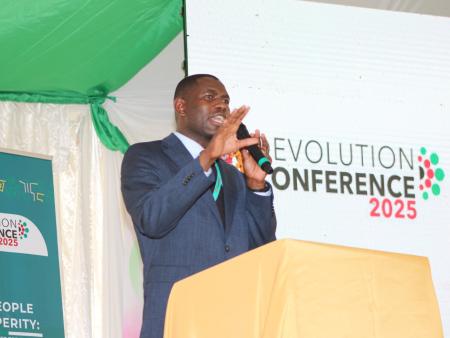
For weeks, the question of how to replace it lingered in closed-door meetings and the corridors of policy conferences. At the Devolution Conference in Homa Bay, the Director-General for Health, Dr Patrick Amoth, finally set out the government’s answer. The Ministry of Health would go to the Treasury for more funds. It would press Parliament to set aside a fixed share of the national budget for “strategic health areas” — family planning, maternal and child health, tuberculosis, HIV, immunisation, and malaria — and make it illegal to spend that money anywhere else.
Defrontera reports on healthcare in Kenya, the innovation and politics, and how it all affects you. Subscribe to our newsletter, The Evidence, for updates.
Donor withdrawal, he told the delegates, was “something that will not change in the foreseeable future”. But he framed it not as a collapse but as “an opportunity to design solutions for our own people”. He pointed to vaccines as proof that domestic resources could take over where donors had left off. In the past, Kenya had struggled to meet its co-financing obligations to Gavi, the international vaccine alliance that purchases vaccines for children in Kenya and other developing countries. This year, those payments were made early — not with donor money, but directly from the national exchequer.
“In the vaccine space where we have struggled previously”, Dr Amoth said, “we have been able to define our interventions from our own pocket.”
While the emphasis is now on domestic resources, he did not rule out working with donors in the future. Any such partnerships, he said, would operate within one budget and one implementation framework, rather than in the silos that had long divided programmes.
The shift, he insisted, would go beyond the question of financing. For years, hospitals had run vertical programmes — donor-funded clinics for HIV and tuberculosis — operating in parallel to the general services funded by the government. Those, he said, would end. “It is the same patient, whether it is diabetes or malaria. There is no need for them to go to a different clinic.”
Another key change would allow counties to spend the funds they collect directly. That authority came in 2023, through a bill that created the Facilities Improvement Fund (FIF). Before that, every shilling collected by a health facility had to be sent to a central county account, and facilities would wait for smaller amounts to be sent back, sometimes months later.
Some counties moved quickly under the new rules. In Vihiga — the county with the highest proportion of fully immunised children in Kenya, at 96 per cent — vaccination rates have not dropped since the donor exit. Immunisation coordinator Edith Anjere said the county authorised facilities to use their Facility Improvement Fund to collect vaccines from regional depots. “The health facilities closer to the regional vaccines depot were permitted to pick vaccines using the Facility Improvement Fund,” she said.
The Council of Governors’ analysis found other examples. In Makueni, the fund built a new accident and emergency department, bought modern equipment, and paid for staff training. In Nakuru, it reduced shortages of family planning commodities. But elsewhere, change has been slower. In Kilifi and Kisumu counties, laws allow facilities to use their own funds — but only after budgets pass through bureaucracies of boards, committees, fund managers, and sometimes the county assembly.
Even if every county moved as quickly as Vihiga, the national budget gap would remain. Kenya’s health budget has been falling for five years, even as costs rise. Referring to the government’s own costing of health services, Dr Oluga said maternal health alone consumes Sh26 billion annually. Of the 1.5 million deliveries each year, 28 per cent are Caesarean sections, each costing Sh32,600 — Sh13.7 billion in total. The other 1.08 million deliveries cost Sh11,000 each, adding Sh11.9 billion more. Cancer care, hypertension treatment, and other chronic diseases carry their own heavy price tags.
The government wants the public to help close the gap through the new Social Health Insurance Fund, with contributions from both individuals and employers. “Someone has to pay for these services,” Dr Oluga said. “The public can — through signing up and paying for the Social Health Insurance Fund.”
The success of the plan will depend on how quickly counties embrace their new powers and how effectively they can keep services running. In Vihiga, the cold chain room is still stocked. Whether the same can be said across Kenya a year from now will be the measure of whether these strategies hold.
Share this feature


