Medicine is why Dan Odera, 88, is one of Kenya’s oldest HIV patients. Now dwindling funding threatens the medicine’s free supply
Forty years since Kenya’s first HIV case was recorded, analysts are wary that heavy donor dependency, evolving economic status for the country, and shifting geopolitics could disrupt programmes that have kept the meds flowing, and risk new infections as funds simply evaporate.


Coils of smoke rise lazily from a charcoal earth kiln and hover above the trees that dot the homestead of Dan Odera in Sinaga village, Siaya County, in western Kenya. In the background, the popular River Yala roars westward.
“When I came here, this was a flood area,” Odera recalls. “People said I wouldn’t harvest anything because everything would be swept away. As a man trained in agriculture, I stopped it,” he says with a hint of pride.
The undulating smallholding of 4.5 acres now teems with food crops: maize, beans, bananas, sweet potatoes, cassava, millet, and yams. Odera also practises dairy farming, producing milk and selling the surplus to his neighbours.
“I produce food for myself and what’s consumed in all these houses,” Odera says, pointing to where his grown children have built their dwellings. When the tide of life turned after he was diagnosed with HIV, Odera responded with calm pragmatism.
“I knew many people who had HIV in Chemelil and were on medication,” he recalls, referencing his old job as a technical agricultural officer for the sugar firm in western Kenya. “I knew I would be all right.”
That was 19 years ago. Today, at 88, Odera is one of the oldest HIV survivors in Kenya. This contrasts with the scenario in 1984, when the first case of HIV was reported in the country, greeted with apocalyptic hysteria.
“There were codenames for HIV admissions,” reveals Dr Elizabeth Irungu, the Regional Technical Director at Jhpiego. “Patients would be admitted with diarrhoea and vomiting. You wouldn’t find them the following morning. We were just recording deaths. Hospitals were a transmission point to the morgue.”
Those who succumbed were entombed in layers of polythene and buried metres below, often under armed guard. Survivors were ostracised and barred from using the same utensils as their families, while employers were at liberty to dismiss those who tested positive.
Normalised HIV
So much has changed since then, with legal protections now safeguarding the rights of all citizens, including those who contract HIV. As Dr Irungu sums it up, “HIV is almost normalised.”
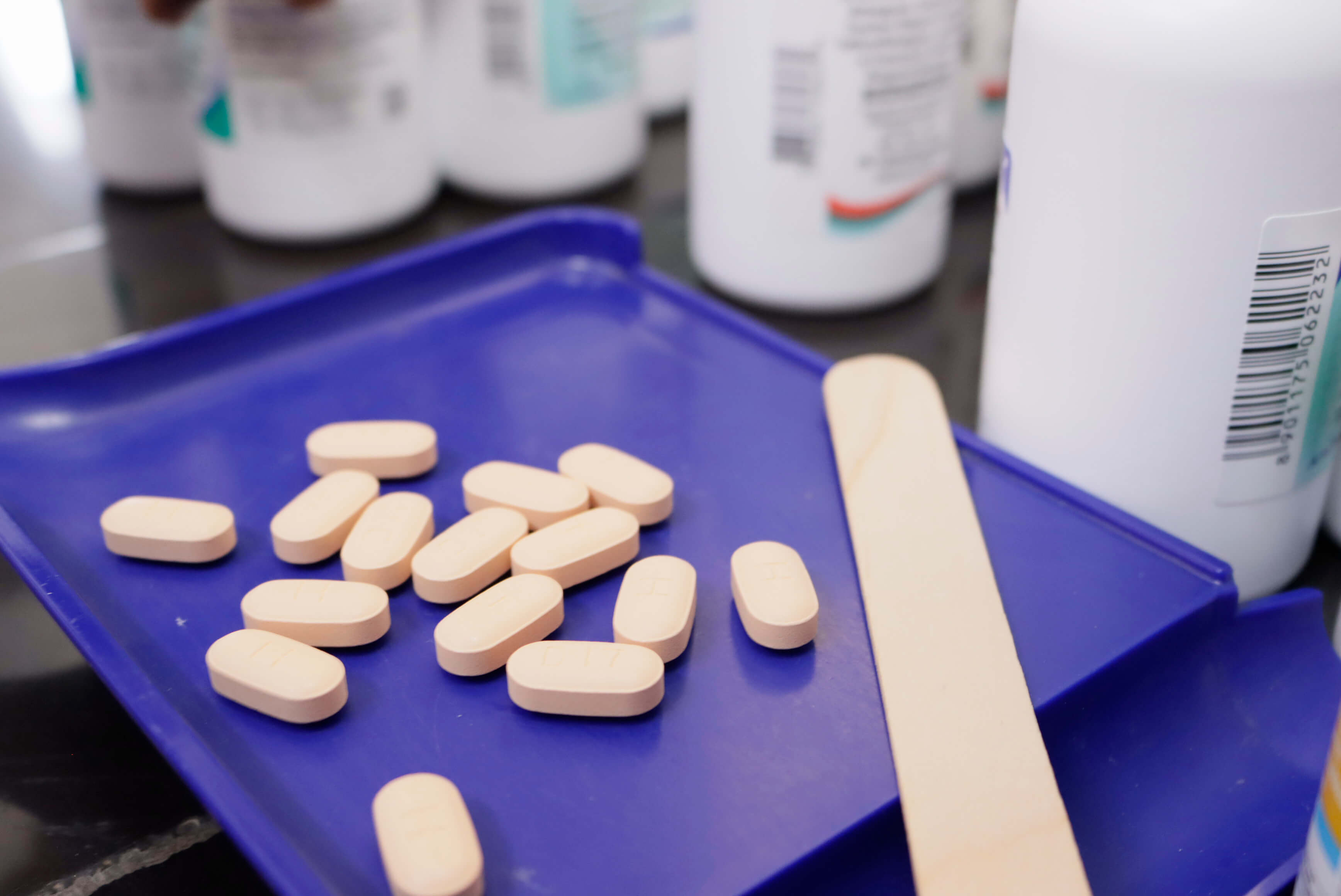
Part of that normalisation is due to life-prolonging therapies that Odera and 1.4 million Kenyans living with HIV take daily. The dosage has been reduced from a cocktail of medications four decades ago to a single tablet taken once a day.
Kenya’s younger generation, popularly known as Gen Z (born between 1995 and 2010), now considers unwanted pregnancies to be a worse tragedy than HIV infection. This attitude jeopardises the many gains Kenya has achieved, emerging as one of sub-Saharan Africa’s success stories in stymieing the spread of HIV. The national prevalence has declined from 14.3 per cent at the start of this century to 3.3 per cent. A national strategy to eradicate HIV by 2030 has been rolled out.
To evaluate the prospects of this vision, let us use Odera’s life journey as a lens to review nationwide policies on HIV over the last 40 years. After all, he has lived with HIV for half that duration.
A family portrait hangs on the wall of Odera’s living room. He sits with his first wife, Jane Anyango Odera, and their six children. They were blessed with six more children, Odera smiles, when he moved to join Chemelil Sugar Company.
As the family expanded, so did Odera’s opportunities to serve in different capacities across the country. While some of his family members stayed in Siaya with their mother, others migrated with him before he retired and returned home in 1992.
During his sojourns, HIV reached Odera’s doorstep. Dan recalls the order in which he lost his five children with a tinge of pain in his voice, counting his fingers to stress the number of casualties in his household: “My eldest son died, then my eldest daughter followed, and another son who trained in agriculture.” All in all, he lost five children and several in-laws.
The sixth family member to die, in 2000, was his wife, Jane. “She just collapsed and died. I think it was the shock of those deaths,” he says. In 2001, Odera remarried Helena, who has three children, including two from a previous relationship.
In 2005, persistent headaches and shivers led to an HIV diagnosis after an initial, erroneous diagnosis of severe malaria. “The doctor said: ‘Bwana, you are a bit affected. You have HIV, but we shall put you on medication.’”
A week later, medics tested his wife. She was HIV-negative, making them what scientists call a discordant couple.
Emblem of Resilience
From then on, Odera was advised to engage only in protected sex. “I was given boxes of condoms!” he enthuses. Condom usage remains a vital intervention in curbing the spread of HIV in Kenya, although it remains a touchy topic among conservative Kenyans and mainstream churches.
Another intervention that captured attention was male circumcision. Odera was circumcised in 2006.
He has remained a model patient, taking his medicine daily—a single tablet at 8 in the morning. By eating right and exercising on his farm, Odera has stayed healthy, except for two weeks when he was hospitalised after missing his ARV therapy.
In 2010, five years after his diagnosis, he announced to his local Anglican congregation, where he had served as a lay leader, that he had HIV. “That freed me,” he smiles.
His monthly hospital reviews and medicine pick-ups, previously facilitated by a stipend of Sh400 from the Kenya Medical Research Institute (Kemri), have since been withdrawn as international HIV funding declines.
“It is time we had honest conversations about self-reliance and charting a sustainable HIV response,” says Health Cabinet Secretary Dr Deborah Mlongo Barasa. She acknowledges that Kenya’s 100 per cent reliance on external donations for HIV response was unsustainable.
External support now stands at about 80 per cent, with the largest contribution coming from the US-led President’s Emergency Plan for AIDS Relief (PEPFAR), established by George W. Bush.
“PEPFAR has channelled over $6.5 billion since 2004,” said President William Ruto last year. “As a result, there has been a 68.5 per cent reduction in new infections and a 53 per cent reduction in HIV-related mortality.”
Still, internal factors such as health service decentralisation and donor requirements have increased pressure on Kenya to fund its HIV response, especially in smaller counties in Kenya.
Despite these challenges, Odera remains an emblem of resilience. Using proceeds from his farming and a small insurance annuity of Sh3,000, he can afford his occasional trips to Kisumu’s Lumumba Sub-County Hospital.
“I dress up and put on a bow tie when I go to Kisumu,” he beams. “After seeing the doctor, I visit my daughter, eat, and drink whatever I want.”
At Lumumba, he often meets fellow congregants picking up HIV medication, many of whom try to avoid him, having not disclosed their status. “We speak openly about ukimwi [AIDS] in my house. Even when my children and their spouses visit for Christmas, I tell them: ‘I know some of you have it, even if you don’t tell me.’”
Share this feature


