As funding shrinks, could this Sh60 pill be Kenya’s Best defence against malaria?
As donor funds dry up, a cheap drug already in Kenya could change the fight against malaria. In Homa Bay, a mother nearly lost her daughter to the disease that still kills 10,000 Kenyans yearly. Scientists say a Sh60 pill can poison mosquitoes through human blood—but will Kenya’s strained health system adopt it?


As a mother of four, Phoebe Adhiambo prides herself on having conquered the jitters of new motherhood. Not every discomfort sends her into panic or rushing to hospital.
But when her five-year-old daughter Ariel started convulsing one evening in their island village of K’akiimba, Homa Bay County, she and her husband had no time to weigh options. They boarded the first boat to the mainland and rushed their daughter to Mbita Sub-County Hospital, a public health facility.
At the facility, clinician Herbert Odhiambo needed only one look. “She had classical signs of severe malaria like vomiting, fever, inability to feed, being very weak, and lying prostrate on her tummy,” he said.
The microscopy test confirmed his suspicion. Ariel was so sick that even after her treatment was complete, the clinicians kept her for two more days.
“I really thought my baby was going to die,” Phoebe recalled tearfully.
Like Phoebe, many mothers in Kenya live with the fear of carrying a child into a hospital only to leave with a body to bury. That fear is well-founded. Malaria killed 10,811 people in Kenya in 2023—part of the 569,000 deaths across Africa. In Kenya, the risk is concentrated in 11 counties—Busia, Kakamega, Kisumu, Migori, Siaya, Bungoma, Homa Bay, Kwale, Turkana, West Pokot and Vihiga—where the Ministry of Health reports as many as eight malaria cases for every ten people each year.
Poisonous blood
Carlos Chaccour, a researcher from the University of Navarra in Spain who has treated children with malaria in Mozambique, would rather prevent those fevers from ever beginning. In a large-scale study in Kwale County with the KEMRI–Wellcome Trust Research Programme, he and his colleagues tested whether an old, cheap drug could make human blood itself deadly to mosquitoes.
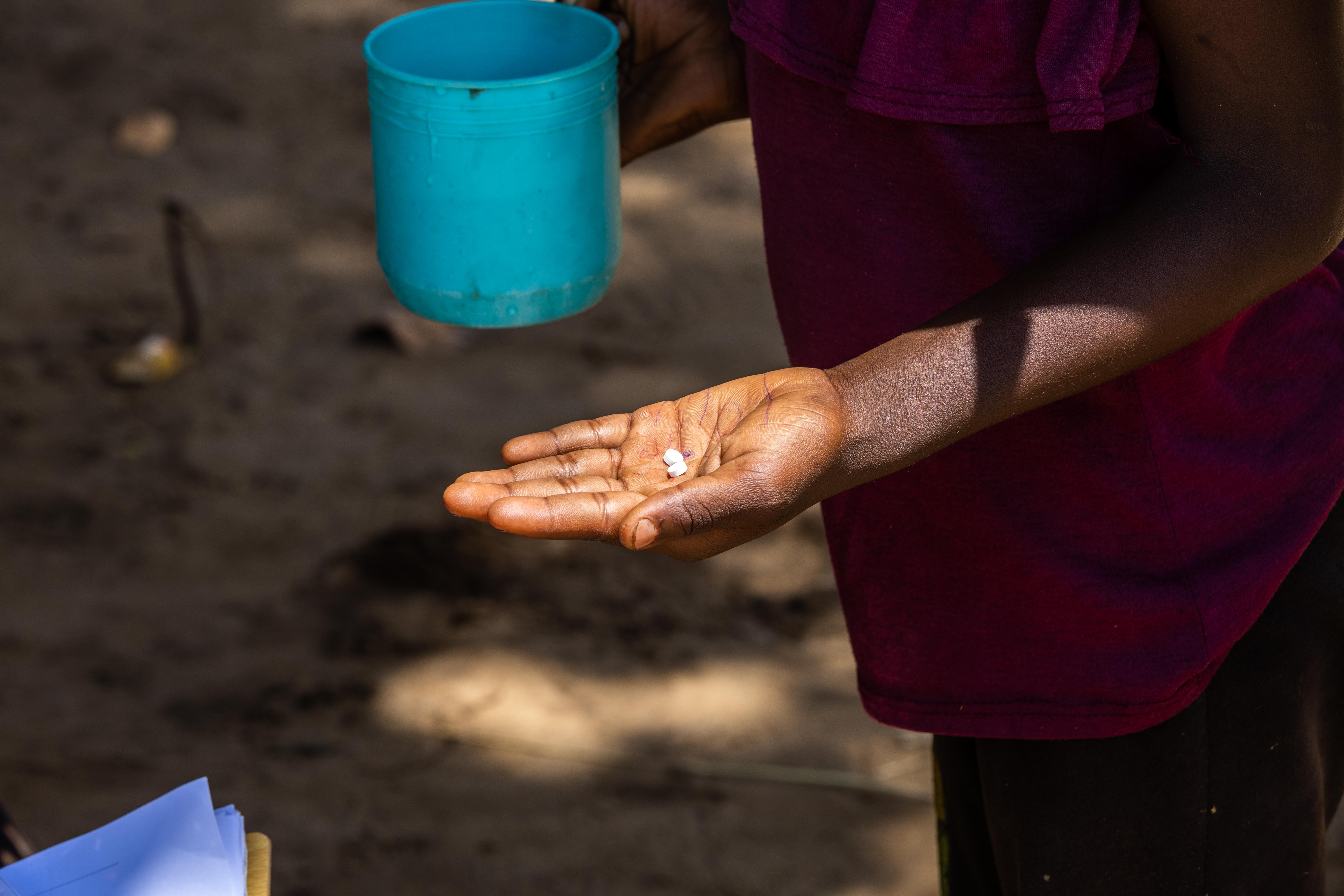
From October 2023, as the rains began, more than 28,000 inhabitants of Kwale were divided into two groups. One received albendazole, a dewormer that does nothing to mosquitoes. The other received ivermectin, a common antiparasitic drug that costs less than Sh100 and is already used in Kenya against elephantiasis and river blindness.
Defrontera reports on global health, innovation and politics, and how it all affects you. Subscribe to our newsletter, The Evidence, for updates.
The results were beyond promising. The study published in The New England Journal of Medicine showed that there were 1,292 malaria cases among the albendazole group and 1,048 among the ivermectin group—a 26 per cent reduction. Communities also reported fewer cases of scabies, head lice and even bed bugs.
"It is like wearing your insecticide… "When the mosquito bites a person who has taken ivermectin, it will die and not bite the other person," Carlos told Defrontera.
At the first bite, this is how ivermectin works to prevent malaria. Malaria gets into the bloodstream when an infected mosquito bites a person; the parasite incubates in the liver for two weeks. Later it multiplies and infects the red blood cells, causing fever, chills, headaches and nausea. The mosquito that bites someone who has taken ivermectin will die, hence breaking the cycle.
Some malaria researchers have cast doubt on whether a 26 per cent reduction is meaningful enough to justify rolling it out as a countrywide measure. But for counties that record millions of malaria cases every year, the impact could be significant.
“Twenty-six per cent for a county that records more than seven million cases every year is quite significant,” said Dr Joseph Mwangangi, a lead researcher in the study.
Dr Mwangangi said ivermectin is a low-hanging fruit that the Ministry of Health could include alongside the other public health measures.
Waiting for an answer
Dr Mwangangi and the KEMRI–Wellcome Trust team presented its findings to the Ministry of Health and the Division of National Malaria Programme (DNMP), the unit responsible for malaria activities in Kenya. There are two ways through which Kenya can utilise ivermectin as a response nationwide: a guideline or inclusion into the strategic plans.
To find out, Defrontera made more than a dozen phone calls and six in-person visits to the Ministry of Health, and the answer was neither direct nor official. The Permanent Secretary of Medical Services, Dr Ouma Oluga, directed Defrontera to the Director General of Health, who, despite multiple requests, did not respond to our enquiries. Dr Kibor Keitany, the head of DNMP, did not respond to requests for comments.
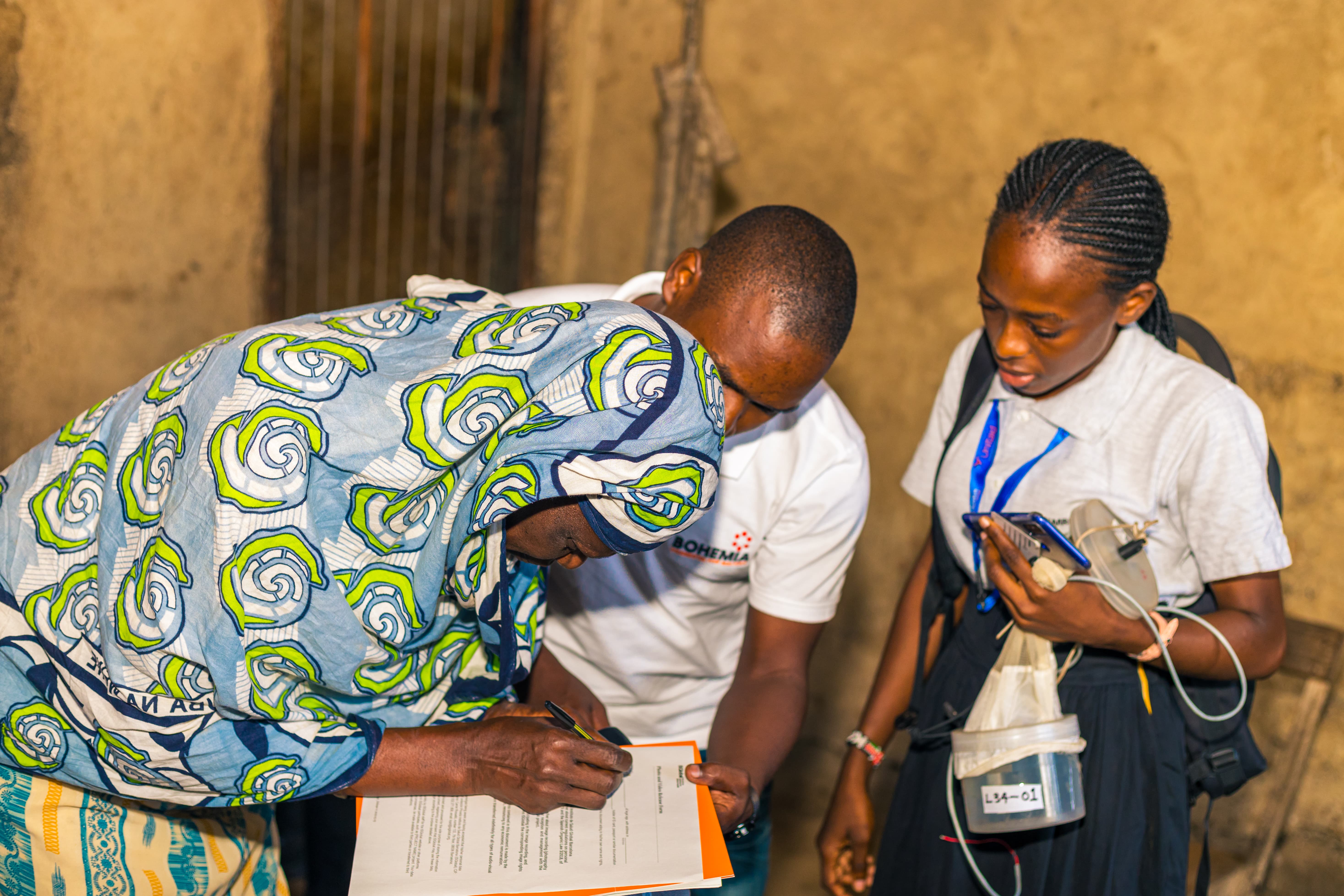
However, sources within the ministry, who requested anonymity, said the decision “depends”. “Given the times we are in, decisions on what public health measures to have will boil down to science and processes, of course, but also on funds,” one official said.
The “times” refer to both politics and the parasite. In 2023, 88 per cent of Kenya’s malaria budget came from the U.S. President’s Malaria Initiative and the Global Fund. Both were hit by a stop-work order from the Trump administration.
The DNMP had budgeted Sh17.6 billion for 2024/25, but the government pledged only Sh1.6 billion—barely nine per cent of what is required. On top of an existing Sh10 billion funding gap, a ministry of health analysis in February flagged another Sh4 billion shortfall tied to donor freezes, warning of “life-threatening shortages” for pregnant women and testing commodities.
The arithmetic is brutal. One round of indoor residual spraying costs about Sh500 million. Already, officials say, it is likely to be cut as the country waits for more funding. A ministry of health statement in March celebrated the “achievement of indoor residual spraying (IRS) in Busia”, but the figures it cited—cases halved from 746 to 358 per 1,000 population—came from 2024, not a new campaign. Defrontera enquiries from Busia confirmed spraying had not taken place in 2025.
By contrast, a 2021 study estimated that purchasing and distributing ivermectin costs US$0.46 per person per round—roughly Sh180 for three rounds a year. That is less than the price of a dose on a pharmacy shelf.
Resistance is coming
Ivermectin, a common antiparasitic medication that costs no less than Sh60 for a dose, could be one of Kenya’s arsenals against the slyness of mosquitoes and the parasites. Between 2000 and 2015, the number of children falling sick or dying from malaria reduced, halved.
“That reduction is mostly because of mass distribution of bed nets, also because of IRS, and partly because we switched from older drugs to artemisinin combination therapies,” Carlos said.
Since 2017, there have not been more reductions in deaths or infections, according to the World Health Organisation. Resistance is one of the reasons.
“Enormous exposure also fuels resistance, because that’s what life does; life evolves. So that reduces the efficacy of insecticide-based interventions, and that includes bed nets, which are the pillar of malaria control,” Carlos explained.
Plasmodium falciparum, the parasite which causes most malaria in Africa and Kenya, shape-shifts rapidly. In the 1960s, it developed resistance to chloroquine, a drug that was once so potent. In the 1990s, artemisinin, a medicine derived from a Chinese herb, arrived and slowed the carnage malaria was having. As are the guidelines in Kenya, clinicians use the medicine artemisinin paired with one of many other medications that the patients swallow and called artemisinin-based combination therapies (ACTs). However, a 2020 paper in the journal Nature reported that researchers detected mutations associated with resistance to malaria parasites in Rwanda.
Ivermectin will not, on its own, be a silver bullet that will conquer malaria. But in an era of shrinking budgets, waning tools, and political silence, a Sh60 pill that can kill mosquitoes and curb parasites may be the most accessible weapon left. Kenya now faces a choice. If low-cost measures such as ivermectin are not adopted, the funding gaps will leave more children exposed and force them to endure a costly, painful treatment they may not survive.
This story is part of Defrontera's special coverage of Malaria, the Deadly Bite
Share this feature

