Kenyan pharmaceutical firm among seven globally licensed to make monthly HIV prevention pill
Merck has selected Kiambu-based Universal Corporation Limited to produce generic alimatravir for 129 countries if the once-monthly PrEP pill.

A Kenya-based pharmaceutical company is one of the seven companies to which pharmaceutical company Merck has granted a licence to produce a low-cost version of a new monthly HIV prevention pill that is at a late stage of development.
Universal Corporation Limited, a pharmaceutical company in Kiambu County, is one of the seven generic drugmakers that Merck will allow to make or import royalty-free generic alimatravir for HIV prevention, Merck said on Friday.
The deal will allow UCL to supply the medicines to hospitals, pharmacies, government programmes, NGOs and donor-funded initiatives. The deal would also allow UCL to use MSD’s patents and manufacturing knowledge without paying royalties for nine years, until 31 March 2035. The other companies are in South Africa (Aspen Pharmacare), Uganda (Quality Chemical Industries) and India (Aurobindo, Cipla, Emcure and Viatris).
Alimatravir is a pill taken once a month for pre-exposure prophylaxis, or PrEP, to prevent anyone who is exposed to HIV from contracting the disease. The pill is now being tested in two large, late-stage studies to determine whether alimatravir is safe and can prevent HIV infection. The generic versions of the pill could cost as little as $5 per person per year.
Kenya participated in the first arm of the study, called EXPrESSIVE-10, to test the medication in adolescent girls and young women. The Gates Foundation supported the first arm. The second, EXPrESSIVE-11, is testing the medication among people with a higher chance of being exposed to HIV in 16 countries.
Scientists moved to these larger studies after an earlier trial involving 350 adults aged 18 to 65 who had a low chance of being exposed to HIV produced encouraging safety results. The research found that alimatravir—and the active form it becomes inside the body—remained in the body long enough to support testing it as a once-monthly pill. However, these earlier studies did not establish whether alimatravir prevents HIV; that is what the two larger trials are designed to find out.
If the trials deliver on their promise, Merck’s Friday statement said, UCL and the other companies will ensure that “sufficient product supply is made available, if approved, in areas of high unmet need following the anticipated U.S. approval to enable early program implementation and ambitious scale-up”.
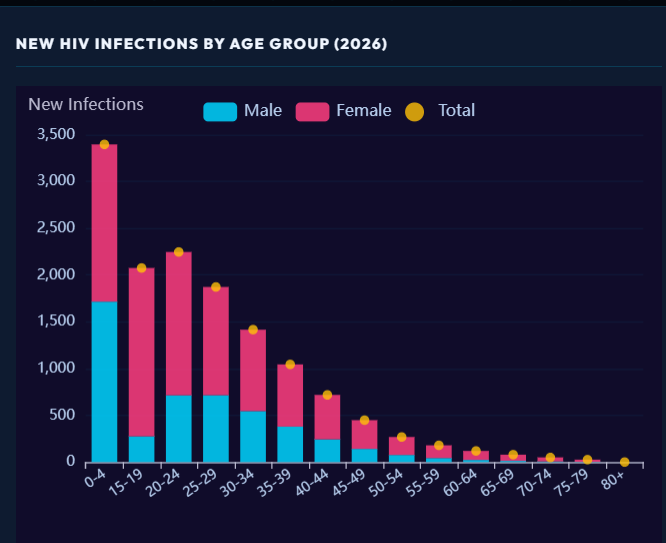
The announcement came in the lead-up to the 26th International AIDS Conference in Rio de Janeiro, Brazil, where public health experts will discuss how to reduce HIV infections amidst the abrupt halt to the United States programme that catered for HIV prevention. A third of non-profits that offered HIV services using PEPFAR funding stopped offering prevention services such as PrEP and condoms, a study by the American Foundation for AIDS Research (amfAR) had shown earlier. In Kenya, the most recent data from the National Syndemic Diseases Control Council (NSDCC) show that there are nearly 14,000 new infections, mostly among people aged between 15 and 24—an age group that has often been prioritised by public health specialists for interventions that do not require daily adherence.
Public health specialists welcomed Merck’s announcement. Mark Suzman, chief executive officer of the Gates Foundation, which funds infectious disease programmes in Kenya, termed the step “important to help protect the communities most affected by HIV”.
While Kenya's $1.2bn pharmaceutical market is the leading producer in East Africa and the third-largest exporter in Africa, it still relies on imports to meet its needs.
Dr Ouma Oluga, the Principal Secretary for the State Department for Medical Services, said the country is aiming to be “a manufacturing hub for Africa”.
Sources
Alimatravir-Sample-VL-Agreement - by Merck
A Study of MK-8527 to Prevent Human Immunodeficiency Virus Type 1 (HIV-1) (MK-8527-010) - clinicaltrials.gov
Kenya HIV estimates - Year 2026
Kenya Health Products and Technologies Local Manufacturing
- Strategy 2026-2030MEASURING THE GLOBAL IMPACT OF PEPFAR DISRUPTIONS: - findings from the Pepfar pulse study
Shifts in PEPFAR-supported HIV treatment in 26 countries from 2024 to 2025 – - Nature Health
Merck Announces Initial Access Plans for Alimatravir, an Investigational Once-Monthly Oral HIV Pre-Exposure Prophylaxis in Phase 3 Development - Alimatravir, an Investigational Once-Monthly Oral HIV Pre-Exposure Prophylaxis …
Share this feature


