Kenya is vaccinating vulnerable groups in 4 counties to slow mpox spread
A new vaccination campaign targeting the counties and people most vulnerable to mpox is underway in a bid to curb transmission of the virus.


In July 2024, Kenya was hit by an outbreak of the viral disease mpox. In August of that same year, the Africa CDC and the World Health Organization (WHO) declared the outbreak a “high-risk public health threat”, and Kenya began its first vaccination campaign in September 2025 to curb the spread of the disease. A second vaccination campaign is already under way in the most vulnerable counties and among the most vulnerable groups.
The 10-day campaign, which started on 17 July, is targeting truck drivers, sex workers and healthcare workers in Mombasa, Kilifi, Busia and Makueni counties. The campaign, led by the Ministry of Health (MoH) and WHO Kenya, will deploy 20,000 doses to people in these groups, who are at high risk of infection. Vaccinating the most vulnerable people in the most affected counties, combined with surveillance and contact tracing, will help contain the outbreak, said Joseph Opurong, the director of public health in Busia County.
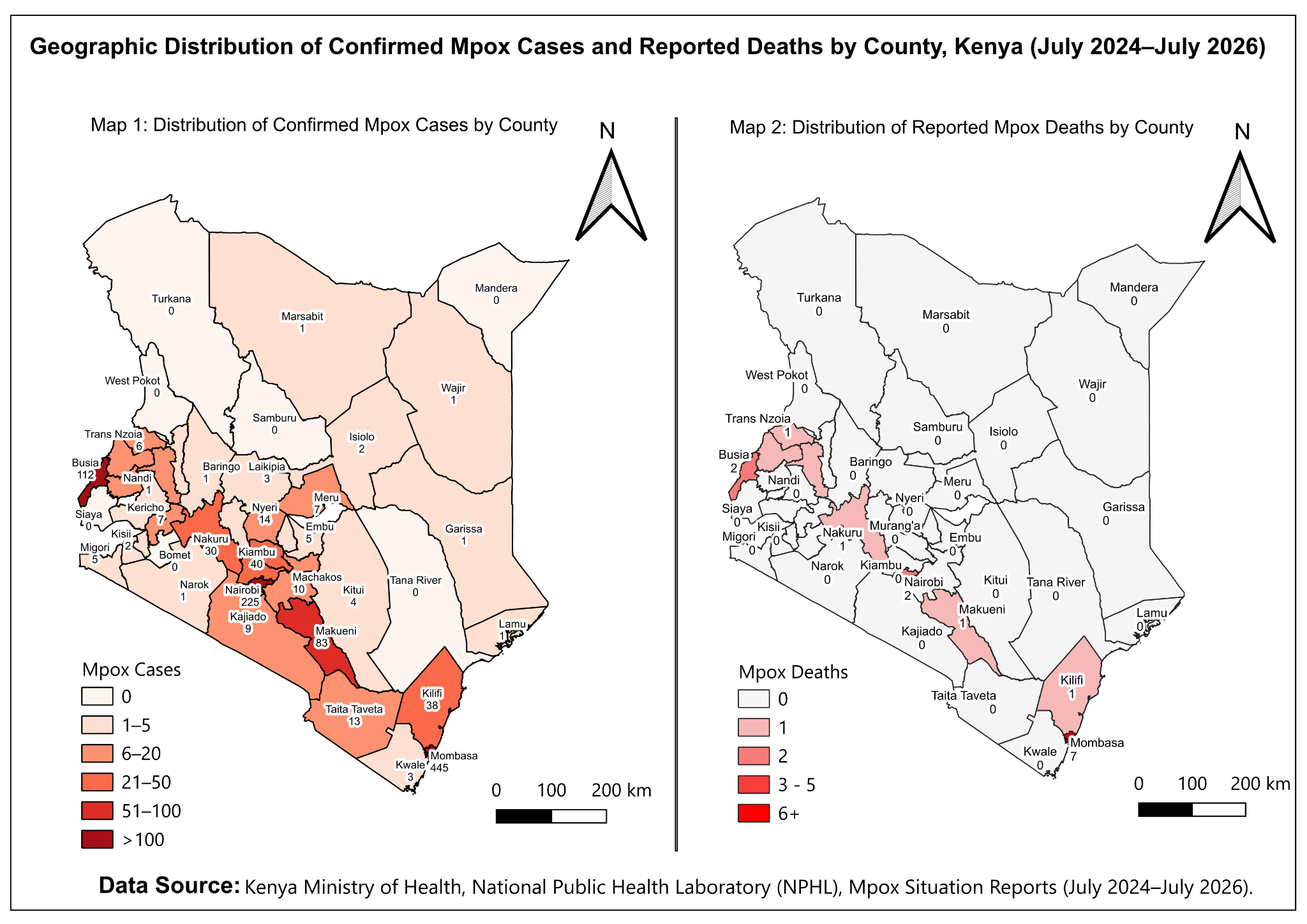
The second vaccination campaign comes as Kenya remains one of Africa’s mpox hotspots. Since the WHO declared the outbreak in July 2024, the country has recorded 1,170 cases and 19 deaths, and 38 of Kenya’s 47 counties have now reported infections, with Embu becoming the latest county to detect cases. About seven in 10 cases have also occurred among people aged between 15 and 44 years, while more than two-thirds of those who died from mpox were living with HIV.
The campaign builds on evidence that the first vaccination campaign helped slow transmission in the highest-risk areas, according to Opurong. That campaign reached more than 10,600 people in Mombasa, Busia and Nakuru counties. It was followed by a marked decline in reported cases, from a peak of almost 250 weekly infections in July 2025 to fewer than 50 during the corresponding period a year later, according to WHO.
But transmission has not been stopped. Surveillance data collected between May and June 2026 ranked Kenya second only to Madagascar in the number of mpox cases reported in Africa. This has prompted further calls to expand vaccination efforts to help curb the spread of mpox in Kenya.
Truck drivers and sex workers vaccinated
A 2025 study by Kenyan and US researchers, published in the Morbidity and Mortality Weekly Report (MMWR), found that more than half of confirmed mpox cases during the 2024 outbreak in Kenya were linked to truck drivers or their contacts along the transport corridor connecting the port of Mombasa with the Malaba border, which links Kenya to other East and Central African countries. More than half of the infections were likely sexually transmitted, and many of the people infected also had HIV, according to the study. The researchers concluded that vaccinating truck drivers, sex workers and other highly mobile people could reduce transmission within Kenya and across the region.
Elijah Nyaga, chairperson of the Long Distance Drivers and Conductors Association of Kenya, told Defrontera that Kenyan drivers travelling to Uganda and the Democratic Republic of Congo (DRC), the country hardest hit by mpox, are being vaccinated.
Nyaga estimates that nearly 5,000 long-distance drivers have received the vaccine since the campaign began this month, including around 3,000 members of his association. “Our people are also being used to conduct the mobilisation, working with the Ministry of Health,” he said. “We need more information and materials to increase sensitisation and awareness.”
Opurong noted that infections have spread beyond the counties targeted during the first vaccination campaign in 2025. “When we started [vaccinations], the outbreak was concentrated in three counties,” he said. “But the disease has spread to more counties, including Makueni, Machakos, Embu and Bungoma.”
Makueni County is one of the new counties included in the latest vaccination campaign. Joshua Mutuku, the county’s disease surveillance coordinator, said it had recorded more than 80 confirmed infections by July 2026, making it one of Kenya’s most affected counties. Despite the rising case numbers, Mutuku said surveillance systems had improved. “Through the efforts of the disease surveillance teams, we have been able to identify cases early and trace their contacts,” he said. “We are currently conducting an active case search."
Sources
World Health Organization’s - Mpox Multi-country external situation report no. 67, published 26 June 2026
CDC Report-
- Clade Ib Mpox Outbreak — Kenya, July 2024–February
Share this feature

