Kenya Ready to Roll Out Twice-Yearly HIV Prevention Drug, Experts Warn of Funding and Approval Hurdles
Kenya is ready to introduce lenacapavir, a twice-yearly injectable drug for HIV prevention, by January 2026. However, health experts fear that limited funding—exacerbated by the possible exit of PEPFAR—and regulatory delays in drug approval by the Pharmacy and Poisons Board could severely restrict access. In a closed-door meeting with the Ministry of Health, experts warned that current resources provided by the Global Fund may only cover 25,000 people.


The Global Fund will give Kenya the funds to purchase lenacapavir—an injection given twice a year to people who are HIV-negative to prevent infection and for which the World Health Organization (WHO) has just released guidelines and recommendations—but the supplies will not be enough, Defrontera has learnt.
Sources that requested anonymity told Defrontera: “The support from the Global Fund can only cater for commodities for about 25,000 people; that is too little for Kenya.”
In a closed-door meeting held last week by the country’s agency that coordinates services for HIV and AIDS, the National AIDS and STIs Control Programme (NASCOP), public health specialists expressed concerns to the Ministry of Health: that while the country was ready to roll out the medicine in public health hospitals, there were no commodities. The fears come after the departure of the United States’ President’s Emergency Plan for AIDS Relief, or PEPFAR, which supported HIV programmes in Kenya.
Kenya is one of the nine “early adopter” countries that will roll out the medicine by January 2026, NASCOP had posted on X, but Gilead Sciences, lenacapavir manufacturer, had listed 18 countries in 2024: Botswana, Eswatini, Ethiopia, Kenya, Lesotho, Malawi, Mozambique, Namibia, Nigeria, the Philippines, Rwanda, South Africa, Tanzania, Thailand, Uganda, Vietnam, Zambia and Zimbabwe.
The Pharmacy and Poisons Board (PPB), the country’s regulatory body for all medicine that comes to Kenya, was at the meeting, and the health experts put the agency to task about whether they would approve the medicine on time. The health specialists' concern arose from a 2023 incident when PPB took nearly two years to approve injectable cabotegravir, another injectable prevention medicine. This delay led to dismal performance of the study that was piloting how the injectable cabotegravir would be rolled out to the public. PPB, Defrontera learnt, told the meeting that Gilead Sciences had not supplied the information necessary for approvals but that the agency would approve the medicine in three months.
Defrontera also learnt that NASCOP formed a committee in late 2024 which wrote a rollout plan, targeting five counties with the highest new infections—Kisumu, Nairobi, Homa Bay, Migori and Mombasa—in the first phase.
There are about 1.4 million people living with HIV in Kenya, about 3.7% of the population. The country has reduced AIDS-related deaths by more than 60%, from 58,446 in 2013 to 20,480 in 2022, according to Kenya’s National Syndemic Diseases Control Council (NSDCC). Additionally, new HIV infections have dropped from 101,448 in 2013 to 16,752 in 2024. The government has repeatedly credited this success to PEPFAR. The US government’s February Stop Work order left a KES 12.9 billion annual dent in Kenya’s KES 28 billion HIV and care budget. If American lawmakers vote on the “rescission package” in three days from now (July 18), what is left of PEPFAR would be $400 million poorer as they slash $900 million for global health.
Kenya’s health minister, Aden Duale, fumbled to answer what the country’s strategy was to ensure there was enough funding for lenacapavir. In a statement issued immediately after the barely-there answer on a video shared from a Senate meeting, Mr Duale stuck to the usual opaque government speak: the ministry is committed to equity, and lenacapavir is a paradigm shift in HIV prevention.
The issue of cost and how it will affect access will come up. Immediately after the United States Food and Drug Administration (FDA) approved lenacapavir for HIV prevention, Gilead Sciences told The New York Times that the drug will cost $28,218 USD (about KES 3.6 million) per person per year. An uproar about those outrageous prices ensued, and experts calculated in a Lancet paper that a generic lenacapavir could cost an average of $40 USD (about KES 5,000) per person-year before falling to half that if bought in “wholesale” of about 10 million people.
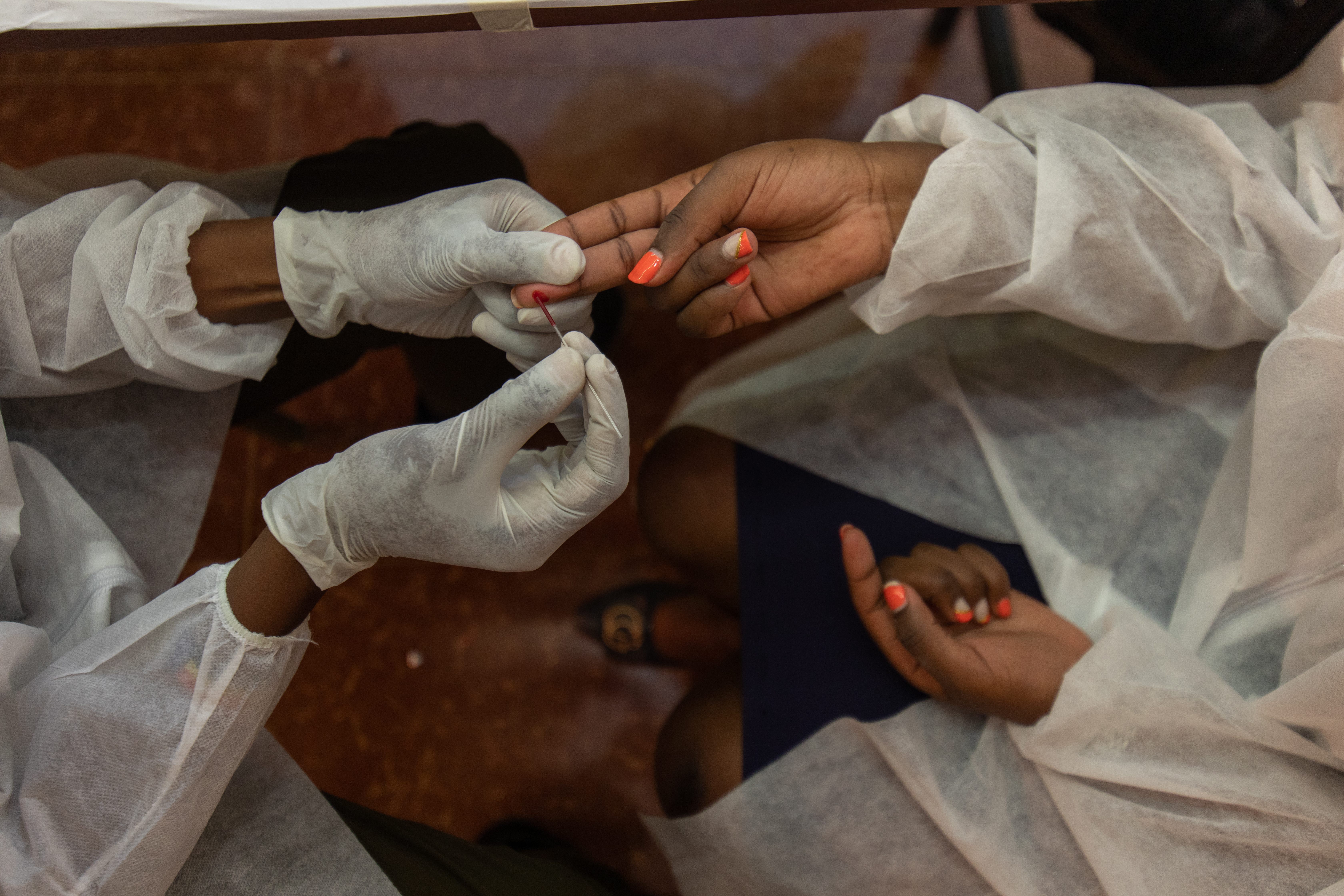
All the eight HIV specialists that Defrontera spoke to said Kenya is ready to deploy lenacapavir, but there will be costs beyond the medicine. Dr Patrick Oyaro, a public health specialist who has run HIV prevention and treatment projects, said the country will need enough testing.
“One of the qualifications to be given lenacapavir is that one is HIV-negative, and that means we have to test... Giving an HIV-positive person the drug is wasting it and also fuelling resistance,” Dr Oyaro told Defrontera.
Dr Oyaro said that the government will have to invest in health education, creating awareness about the medicine, so that people remain aware that while it protects against HIV, people are still at risk of other sexually transmitted infections. He also said that while there are other projects that Kenya has implemented successfully to prepare the health system for lenacapavir, healthcare workers will still need refresher training on how to counsel the patients and respond to and manage any side effects, if any patient reports them.”
Defrontera reports on healthcare in Kenya, the innovation and politics, and how it all affects you. Subscribe to our newsletter, The Evidence, for updates.
Community health promoters, a cadre of workers in the health system, often offered this health education; PEPFAR trained and paid those.
One of those activities that prepared Kenya was the country’s steps to making other forms of pre-exposure prophylaxis (PrEP) accessible; lenacapavir is an example of PrEP also. Kenya had less than 10,000 people on PrEP in 2016, a number that increased by 4,000% to 438,003 users in December 2023, according to NASCOP. Oral PrEP moved from being available only in brick-and-mortar health facilities to community pharmacies, and the government learnt which cadre of healthcare workers could administer PrEP.
Like most parts of the world, Kenya is on a path to ending HIV/AIDS using two steps: the government is treating those who are already living with the virus and preventing them from transmitting the virus to those who are negative. Targets help; set a to-do list for the government. The formula from UNAIDS is a lyrical “95-95-95”: 95% of those infected know that they have the virus; once they know, 95% of them should take antiretroviral drugs (ARVs) to suppress their infections; 95% of those taking the ARVs suppress the viruses in their body.
Dr Kenneth Juma, an epidemiologist and senior research officer at the Africa Population Health Research Centre (APHRC), said prevention is critical and almost [financially] cheaper: HIV-negative people do not need medications for the rest of their lives.
“We have ~100 new infections weekly among girls/young women 15–24 in Kenya,” Dr Juma wrote to Defrontera, “this new infection, in turn, inflates the prevalence over time.”
Dr Juma said there is an “ongoing resurgence of HIV infections that remains unchecked... the prevalence remains way higher among high-risk populations at >15%. This includes sex workers, {men who have sex with men}, and those who inject drugs.”
They routinely receive post-exposure prophylaxis—HIV medications taken after potential exposure to HIV to prevent infection, Dr Juma said. However, the multiple pills are harder for people to take.
Share this feature


