Kenya’s Contraceptive Supply Was Already Low - Then the US Withdrew from UNFPA
UNFPA had set KES 4.2 billion aside for reproductive health services between 2022 and 2026 in Kenya, targeting eight counties in Kenya to stabilise contraceptive supplies, cut teenage pregnancy from 15 per cent to 10 per cent, prevent 590,000 unsafe abortions, and reduce maternal deaths. When the United States withdrew from the UN agency, it did more than disrupt contraceptive supply in the country.


In its current strategy, the United Nations Population Fund (UNFPA)—the world’s largest provider of sexual and reproductive health programmes—set aside $35.6 million for Kenya’s reproductive health services.
The money, equivalent to Ksh 4.2 billion, was to be used between 2022 and 2026 to help Kenya cut teenage pregnancy to 10 per cent from 15 per cent, prevent 590,000 unsafe abortions, prevent maternal deaths, and support other life-saving reproductive services. The agency is working in eight counties—Turkana, Bungoma, Nairobi, Narok, Isiolo, Baringo, Garissa and Kwale—which it chose due to the desperate need for family planning. Then, in April last year, the Newyork Times reported that UNFPA lost 40 per cent of its funding, alongside the dismantling of the United States Agency for International Development (USAID) by the US government. On Wednesday, the US White House’s Presidential Memorandum listed the UN agency among the 66 international entities that the US has withdrawn from.
In an email to Defrontera, UNFPA told Defrontera that while the UN agency has not received any formal communication from the United States government beyond the memorandum, it remains “determined to deliver results that matter in the 150 countries where we operate.”
“UNFPA hopes that the U.S. Government will reconsider its stance,” the statement read.
External donors fully support Kenya’s family planning services, including purchasing commodities and devices and even training healthcare workers to offer these services. UNFPA, for instance, has invested more than Ksh 12 billion in Kenya between 2014 and 2024, according to data from the organisation’s website. The United States is among the top three sources of this funding to Kenya.
How we arrived at the Ksh 12B
The agency’s work falls into three major categories—ensuring all women and men who need it have access to family planning, preventing maternal deaths, and reducing gender-based violence. However, it is the contraceptives component that will hurt Kenyan women the most because there are not many other partners working in this area. In July last year, the Division of Reproductive and Maternal Health at the Ministry of Health, Dr Edward Serem, told Defrontera that the country’s supply of family planning products was dismally low. Defrontera’s inquiry to the Kenya Medical Supplies Agency, the government body that distributes family planning commodities, revealed that little has changed.
“I see they are approaching new donors, but not much has changed so far,” said a source from KEMSA who asked not to be named.
After the dismantling of USAID, which funded 30 per cent of Kenya’s healthcare, defunding UNFPA will endanger the lives of many women, as family planning is one of the ways of preventing maternal mortality. One way family planning prevents death is by delaying pregnancy by at least two years following childbirth, allowing women’s bodies to heal and reducing the risk of complications in subsequent deliveries.
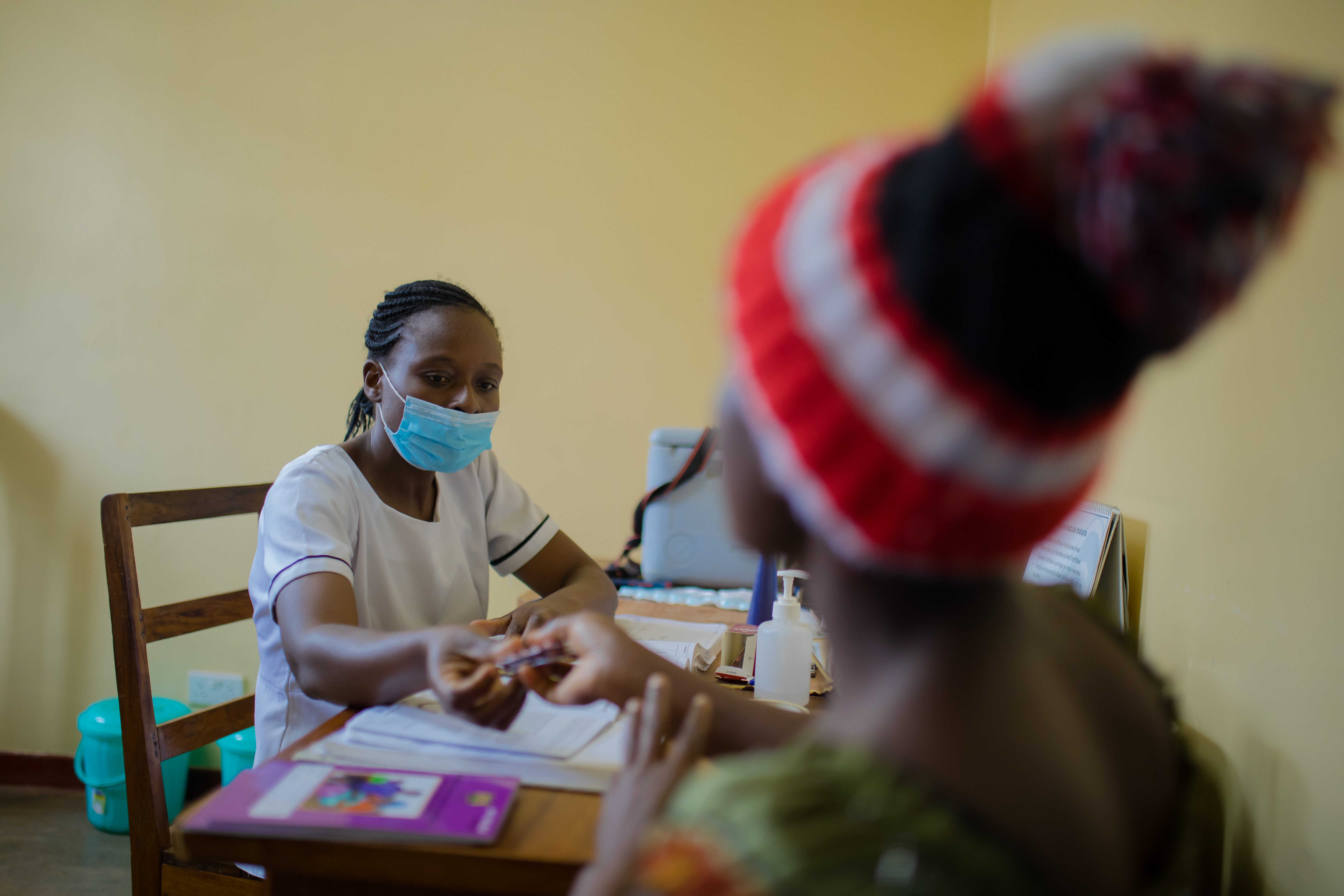
Family planning also prevents deaths among women who attempt to procure abortions, often in unsanitary conditions, because they do not intend to carry those pregnancies to term. The research body African Population and Health Research Center (APHRC) reported that nearly a third of the “2,850,346 pregnancies in Kenya in 2023 … ended in an induced abortion.”
Yet one in ten (14 per cent) sexually active women do not have access to modern contraceptives, according to the country’s current Kenya Demographic Health Survey. In counties such as Mandera and Wajir, only 2 per cent can access modern contraception, compared to Embu at 82 per cent.
Kenya’s current budget allocated only Ksh 500 million ($3.9 million) to buy family planning and reproductive health commodities, a 50 per cent decrease from what the national government had provided the previous year. This reliance on external support has placed Kenya in the middle of reproductive health politics and wars.
UNFPA began its operations in Kenya in 1972. Thirteen years later, the US government enacted the Kemp–Kasten Amendment, a law that forbids foreign aid to an organisation involved in coercive abortion or involuntary sterilisation. The agency has denied the abortion allegations, but this has not stopped interruptions to its funding, which have subsequently interrupted the support it gives Kenya. On top of the recent declarations, UNFPA’s funding has been stopped four times: between 1986 and 1988, 1989 and 1993, 2002 and 2008, and 2017 and 2020.
Share this feature


